



TRPM3
TRPM3 belongs to the melastatin subfamily of TRP channels and represents a non-selective cation channel activated by pregnenolone sulfate, osmotic pressures, and heat[1]. Mechanistically, TRPM3 is expressed in somatosensory neurons, is frequently coexpressed with TRPA1 and TRPV1, and may contribute to noxious heat detection and heat hyperalgesia during inflammation[2]. In disease models, gain-of-function TRPM3 variants caused increased basal activity, cellular calcium overload, and neurodevelopmental disorders with epilepsy, altered pain perception, and cerebellar involvement[3]. Compared with related isoforms, TRPM3 exists as multiple splice variants with significantly different biophysical properties, whereas TRPM1 is linked to retinal ON-bipolar signaling and congenital stationary night blindness[2]. For experimental applications, TM3E3 partially inhibited TRPM3-mediated ionic current and Ca2+ entry without affecting TRPC5, TRPV4, TRPM2, or endogenous ATP responses[4]. Volatile anaesthetics also inhibited agonist-induced and heat-activated TRPM3 Ca2+ signals and currents in recombinant cells and sensory neurons[5].
Références:
- [1]. Held K, et al. TRPM3 in Brain (Patho)Physiology. Front Cell Dev Biol. 2021 Feb 26;9:635659. [Content Brief]
- [2]. Blair NT, et al. Transient Receptor Potential channels (TRP) in GtoPdb v.2025.1. IUPHAR/BPS Guide to Pharmacology CITE. 2025;2025(1).
- [3]. Burglen L, et al. Gain-of-function variants in the ion channel gene TRPM3 underlie a spectrum of neurodevelopmental disorders. Elife. 2023 Jan 17;12:e81032. [Content Brief]
- [4]. Naylor J, et al. Production of a specific extracellular inhibitor of TRPM3 channels. Br J Pharmacol. 2008 Oct;155(4):567-73. [Content Brief]
- [5]. Kelemen B, et al. Volatile anaesthetics inhibit the thermosensitive nociceptor ion channel transient receptor potential melastatin 3 (TRPM3). Biochem Pharmacol. 2020 Apr;174:113826. [Content Brief]
-
TRPM3 Produits associés (9)
Produits associés (9)

-
Rosiglitazone
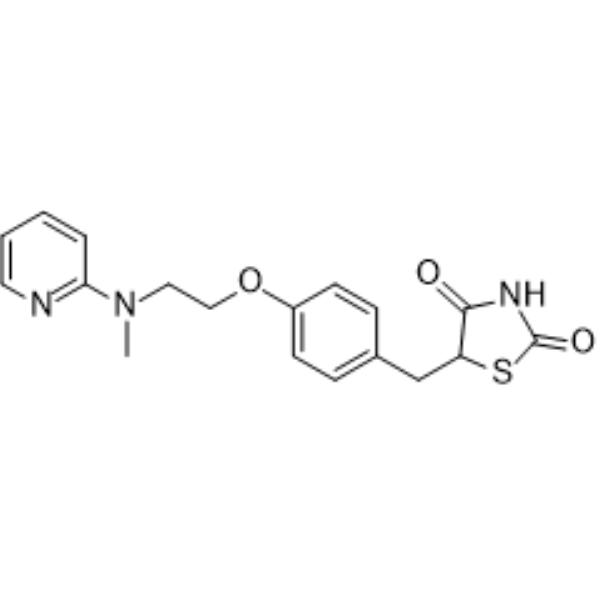 0 ImagesSynonyms: BRL 49653Rosiglitazone (BRL 49653) is an orally active selective PPARγ agonist (EC50: 60 nM, Kd: 40 nM), with blood-brain barrier permeability. Rosiglitazone is an TRPC5 activator (EC50: 30 μM) and TRPM3 inhibitor. Rosiglitazone can be used in the research of obesity and diabetes, senescence, ovarian cancer.
-
CIM0216
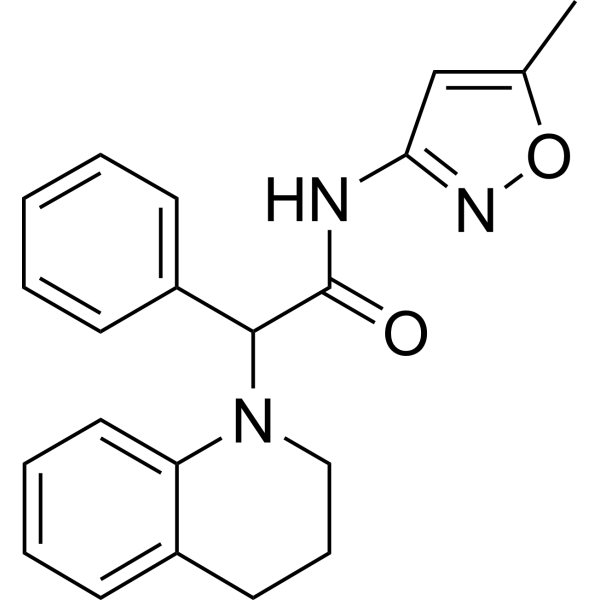 0 ImagesCIM0216, a synthetic TRPM3 ligand, acts as a potent and selective agonist of TRPM3. CIM0216 exhibits selectivity for TRPM3 over TRPM1, TRPM2 and TRPM4-8. CIM0216 acts in a TRPM3-dependent manner to induce pain and evoke neuropeptide release from sensory nerve terminals in vitro. CIM0216 is a powerful tool for studies of the physiological functions of TRPM3, and can be used for neurogenic inflammation research.
-
Rosiglitazone hydrochloride
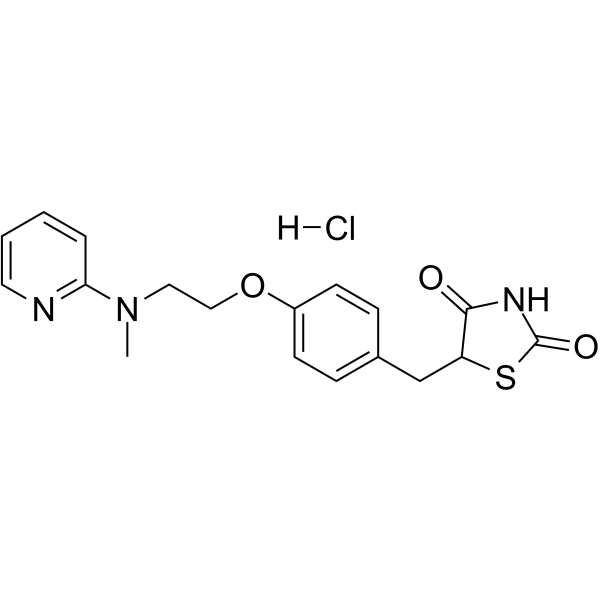 0 ImagesSynonyms: BRL 49653 hydrochlorideRosiglitazone (BRL 49653) hydrochloride is an orally active selective PPARγ agonist (EC50: 60 nM, Kd: 40 nM). Rosiglitazone hydrochloride is a TRPC5 activator (EC50: 30 μM) and TRPM3 inhibitor. Rosiglitazone hydrochloride can be used in the research of obesity and diabetes, senescence, ovarian cancer.
-
Sphingosylphosphorylcholine
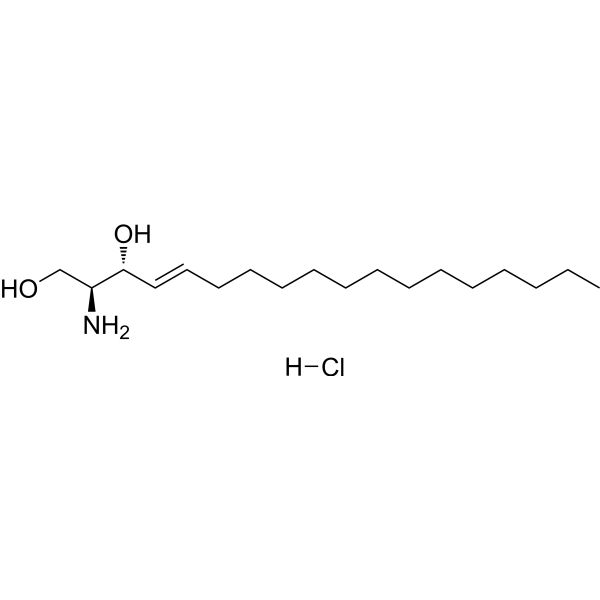
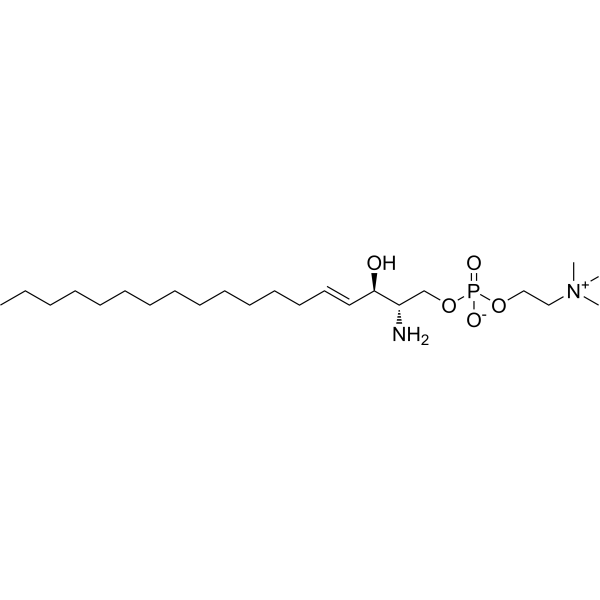 0 ImagesSphingosylphosphorylcholine is a bioactive lipid and a major component of plasma high-density lipoprotein that binds to OGR1 with a Kd of 33.3 nM. Sphingosylphosphorylcholine triggers delayed phosphorylation of Smad2, upregulates α-SMA expression, and activates TRPM3. Sphingosylphosphorylcholine reduces Apoptosis and upregulates the expression of uPA and its receptor uPA-R. Sphingosylphosphorylcholine exerts anti-apoptotic, anti-cardiac hypertrophy and pro-wound healing effects. Sphingosylphosphorylcholine induces scratching behavior in mice. Sphingosylphosphorylcholine is used in studies related to atopic dermatitis, promyelocytic leukemia, heart failure, myocardial ischemia/reperfusion injury, ovarian cancer, breast cancer, pancreatic cancer, and skin wound healing disorders in genetically impaired healing diabetes.

-
Rosiglitazone potassium
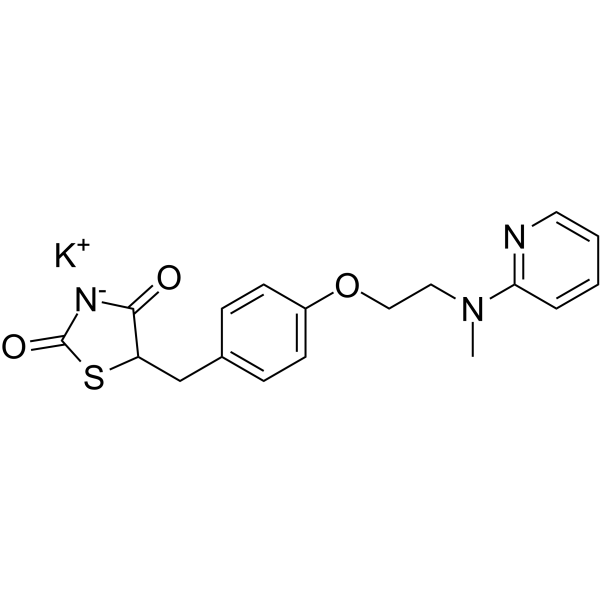 0 ImagesCat. No.: HY-17386BCAS No.: 316371-84-3Synonyms: BRL 49653 potassiumRosiglitazone (BRL 49653) potassium is an orally active selective PPARγ agonist (EC50: 60 nM, Kd: 40 nM). Rosiglitazone potassium is a TRPC5 activator (EC50: 30 μM) and TRPM3 inhibitor. Rosiglitazone potassium can be used in the research of obesity and diabetes, senescence, ovarian cancer.
-
BD-1063
 0 ImagesCat. No.: HY-18101CAS No.: 150208-28-9BD-1063 is a selective σ-1 receptor antagonist with inhibitory activity against TRPC5 and TRPM3. BD-1063 exerts anti-hyperalgesic and anti-allodynic effects by inhibiting sustained calcium influx mediated by TRPC5 and TRPM3, and reverses the effects of Carrageenan (HY-125474). BD-1063 also significantly reduces excessive ethanol self-administration behavior. BD-1063 is widely used in studies on the mechanisms underlying neuropathic pain, inflammatory hyperalgesia, and alcohol abuse and dependence.



